Congress Faces a December 11 Cliff: Government Funding, the NDAA, the Farm Bill and the Cyber Sharing Law All Due After the Midterms
When Congress comes back after the November 3 midterms, it will have about five weeks before several deadlines land on the same day. The stopgap funding law, H.R. 6500, signed on September 2, keeps the government open until December 11. The same law carries the National Flood Insurance Program, the 2015 cyber threat-sharing law, surface transportation authority and the EPA’s chemical fee program to that date.
The farm bill has already lapsed. The defense policy bill is stuck in the Senate. And a long list of health and tax items runs out on December 31.
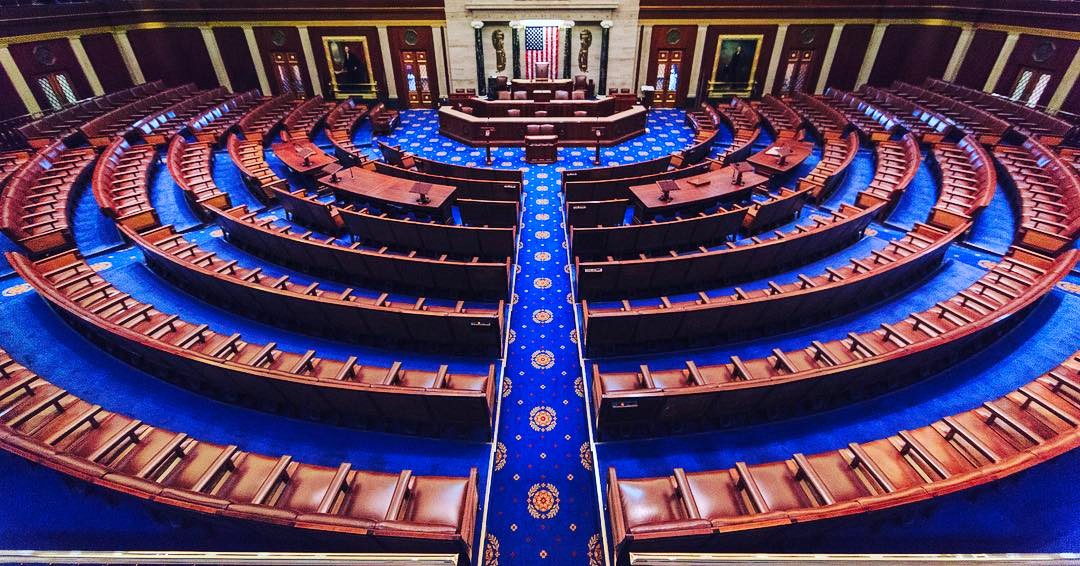
Photo: Office of the Speaker of the House, public domain via Wikimedia Commons
Funding
Of the twelve regular spending bills for fiscal 2027, the House has passed three: Agriculture, Military Construction-VA and National Security-State. The Senate has passed none. So the choices for December are familiar: an omnibus, a package of a few bills, or another stopgap into the new year.
The election result will shape that choice. If control of either chamber is set to change in January, the party losing power has a reason to settle now and the party gaining it has a reason to wait. The run of stopgaps behind this one is in our post on the funding deadline, and where the twelve bills stand is in our appropriations tracker.
The NDAA streak
Congress has passed a National Defense Authorization Act for 65 years in a row. The fiscal 2027 bill is at risk of breaking that run.
The House passed H.R. 8800 on July 22 by 216 to 212, an unusually close vote for a bill that normally draws wide support. The Senate Armed Services Committee approved its version, S. 4784, by 18 to 9 in June. On July 14 a cloture vote to start debate failed, 50 to 46, and the Senate hasn’t touched it since. Democrats have held it up over the war with Iran, and the House text includes the SAVE Act on voter citizenship, which the Senate won’t accept.
Both versions authorize about $1.15 trillion in base defense spending. The Pentagon wants $1.5 trillion, with $350 billion of it through reconciliation, as covered in our post on the defense request. Since 1977 the NDAA has on average been signed about 45 days into the fiscal year, so December is late but not unusual.
The farm bill
The extension of the 2018 farm bill expired on September 30. Most programs keep running for now, but commodity and dairy supports run out on December 31. After that, the Agriculture Department would have to revert to permanent law from 1938 and 1949, which could sharply raise what the government pays to support milk prices. Farm-state members call it the dairy cliff.
The House passed its farm bill 224 to 200 in April. The Senate Agriculture Committee approved its own on September 16 on a party-line 12 to 11 vote. The main dispute is the 2025 law’s shift of SNAP costs to states. CBO puts the bill’s mandatory spending at $1.374 trillion over ten years, $985 billion of it nutrition.
The rest of the list
The Cybersecurity Information Sharing Act of 2015, which protects companies that share threat data with the government, has been running on short extensions since it lapsed during the 2025 shutdown. Senator Rand Paul, who chairs the Homeland Security Committee, is blocking a long-term renewal. We covered the stakes in our post on the law.
On December 31 the 2.5% Medicare physician payment increase ends, as does mandatory money for community health centers and current TANF funding. The tax-writing committees have reported bills to extend expiring tax breaks such as the Work Opportunity Tax Credit. A water projects bill, WRDA 2026, passed the House 415 to 9 in September and is a candidate to ride along.
What to watch
The lame duck is short, and every item competes for the same floor time. The usual outcome is one large package in mid-December carrying whatever has a deal, plus extensions for the rest. The question this year is whether the NDAA and the farm bill make it into that package, or slip into a new Congress with a different majority.